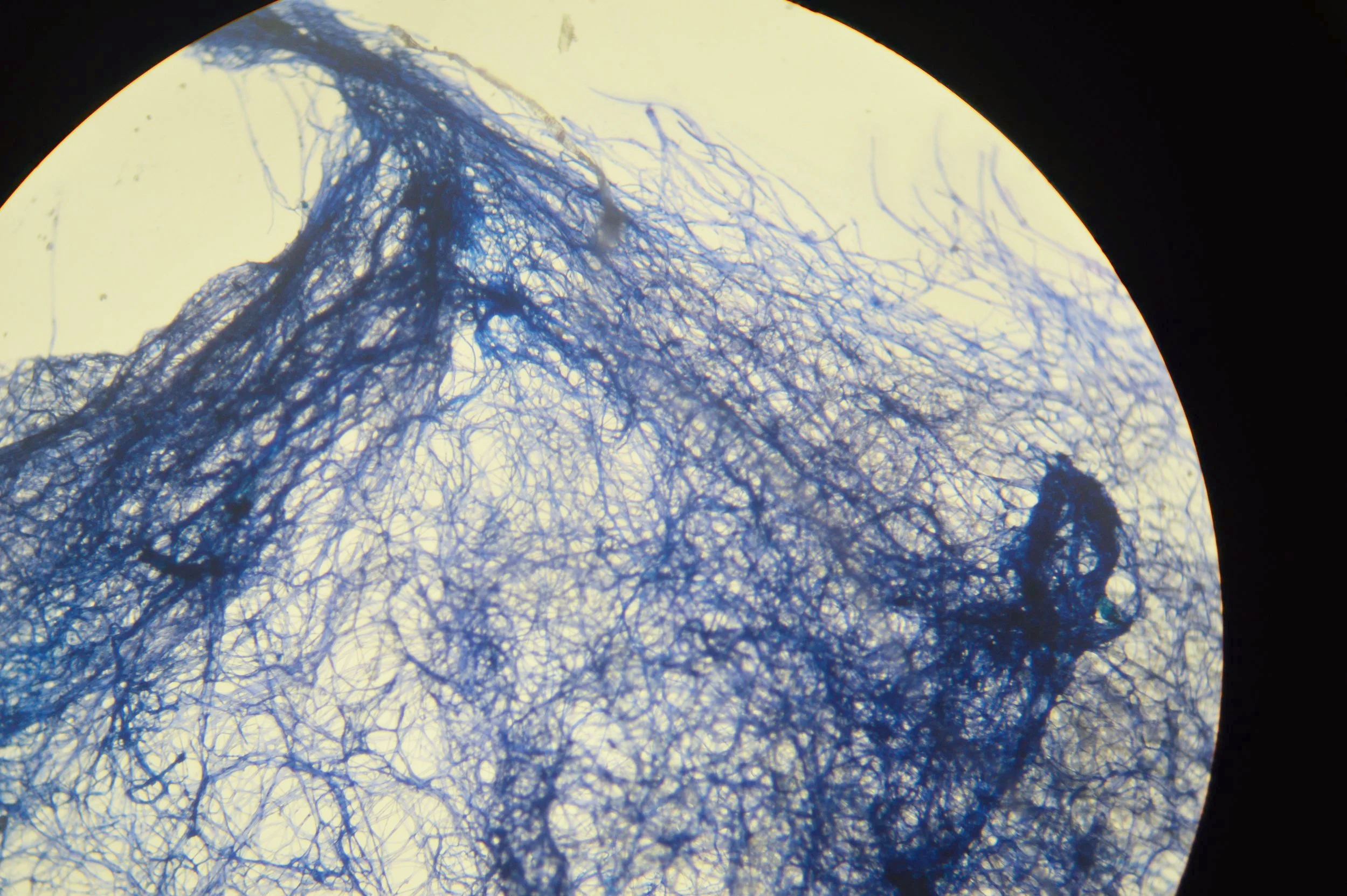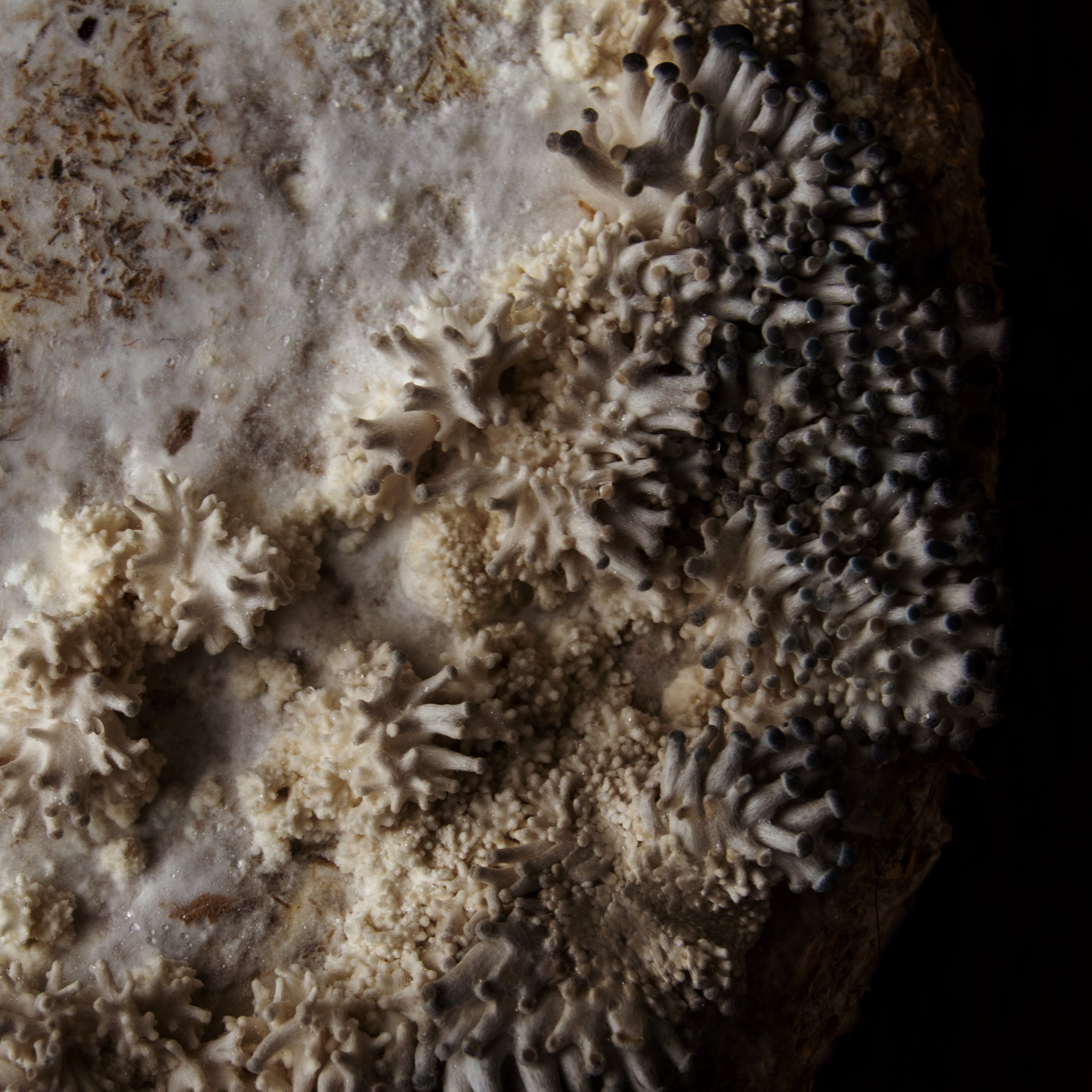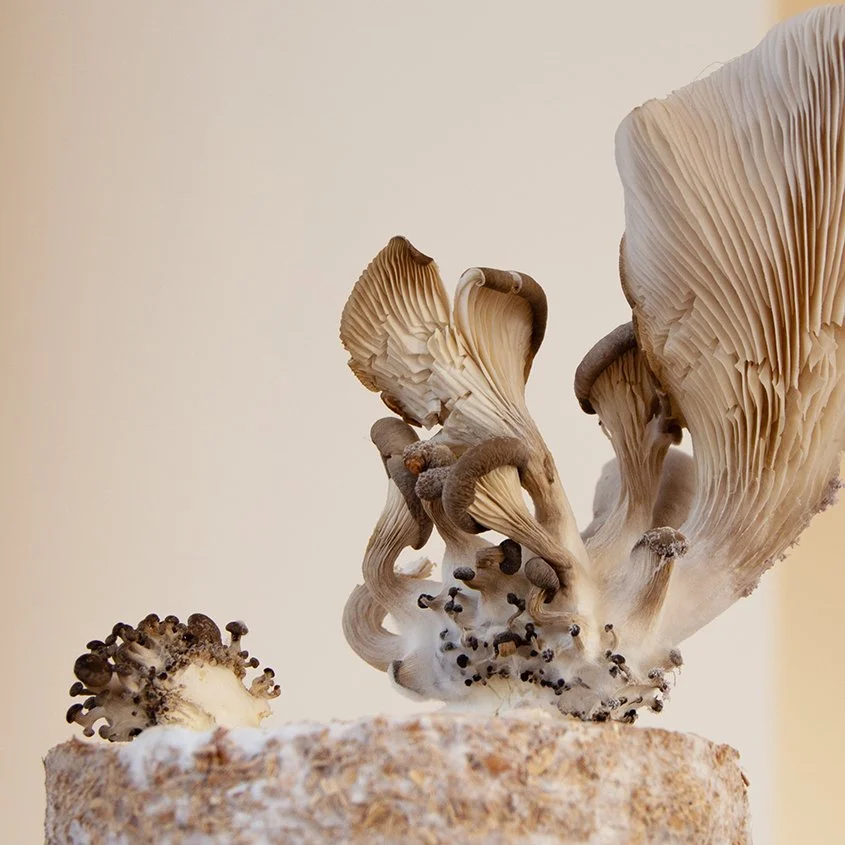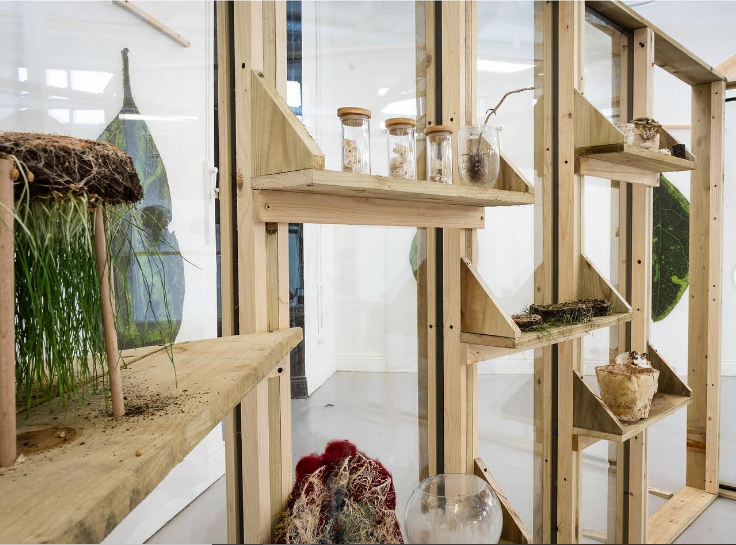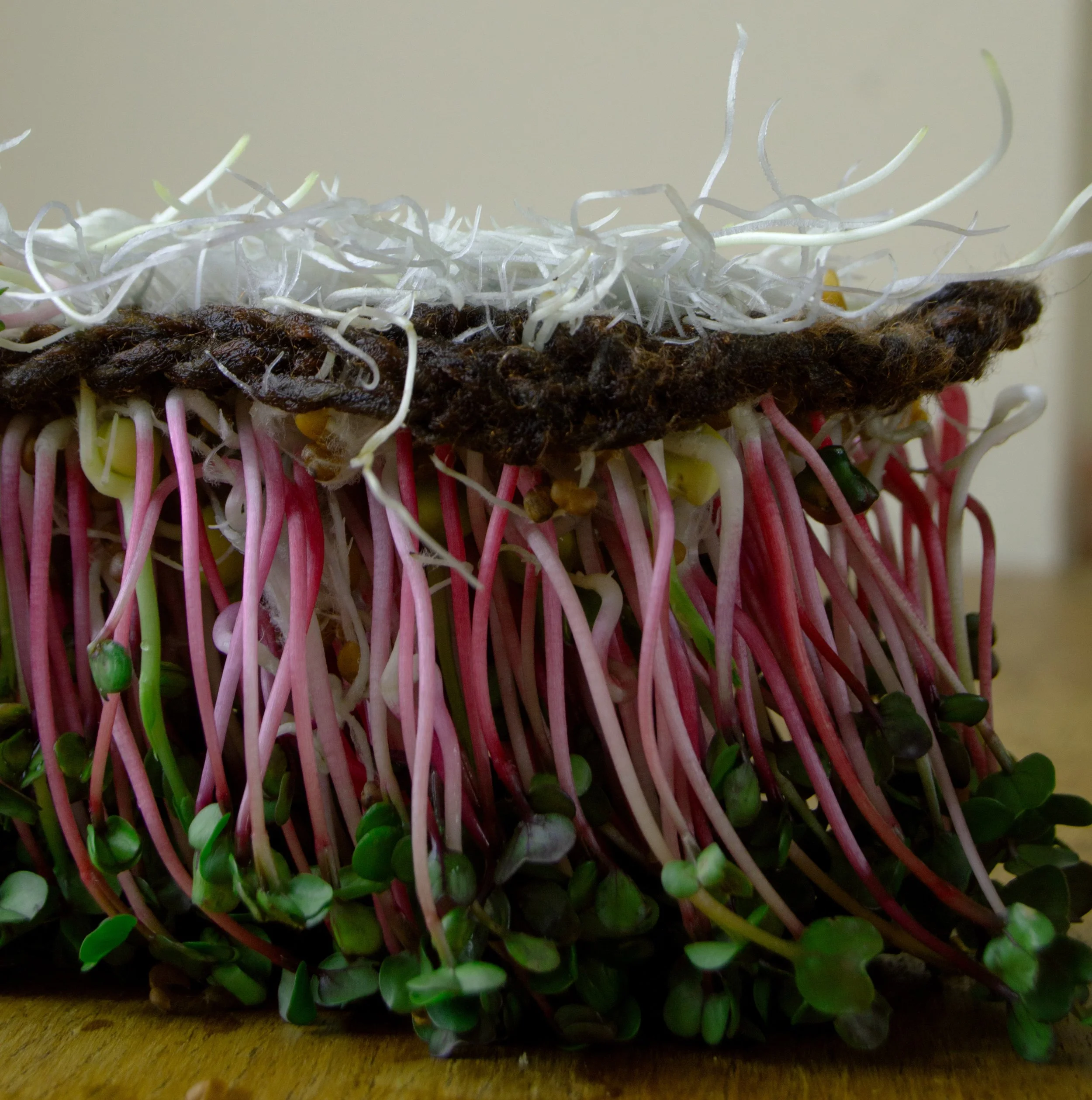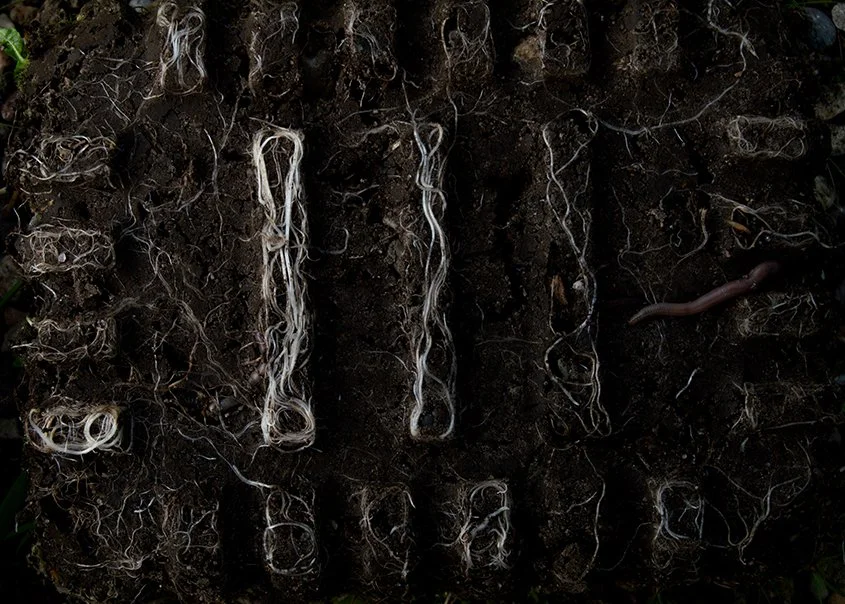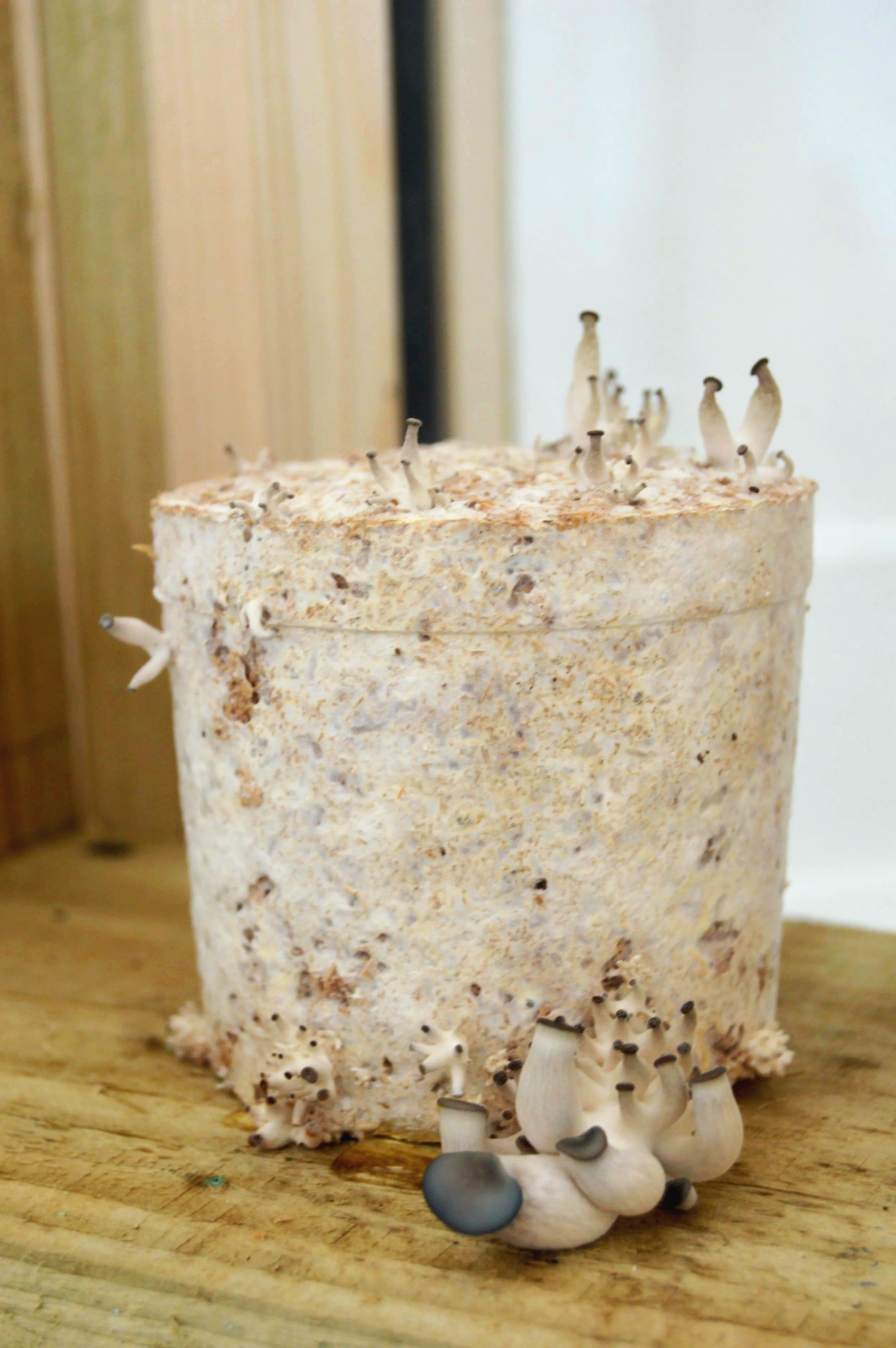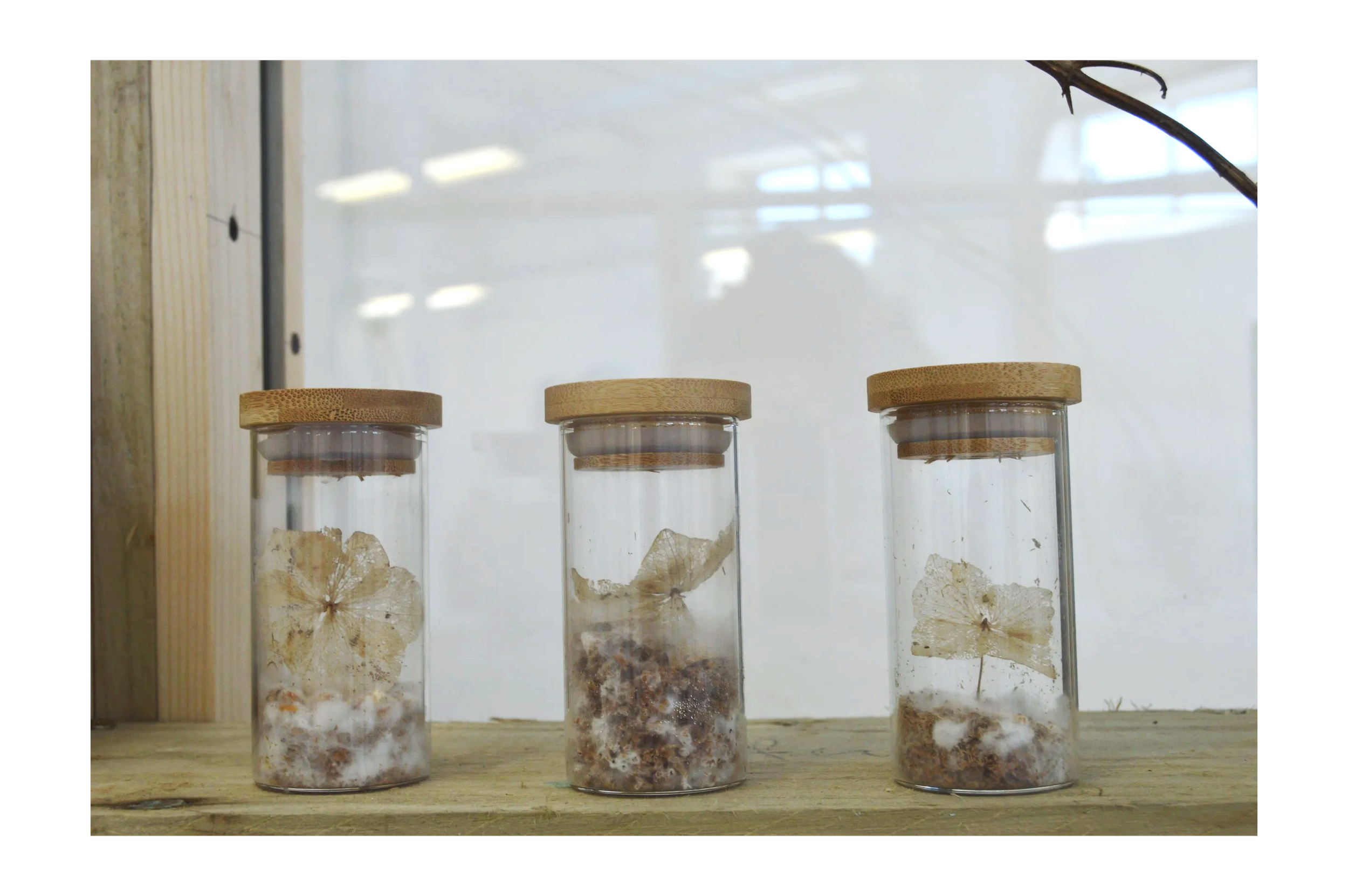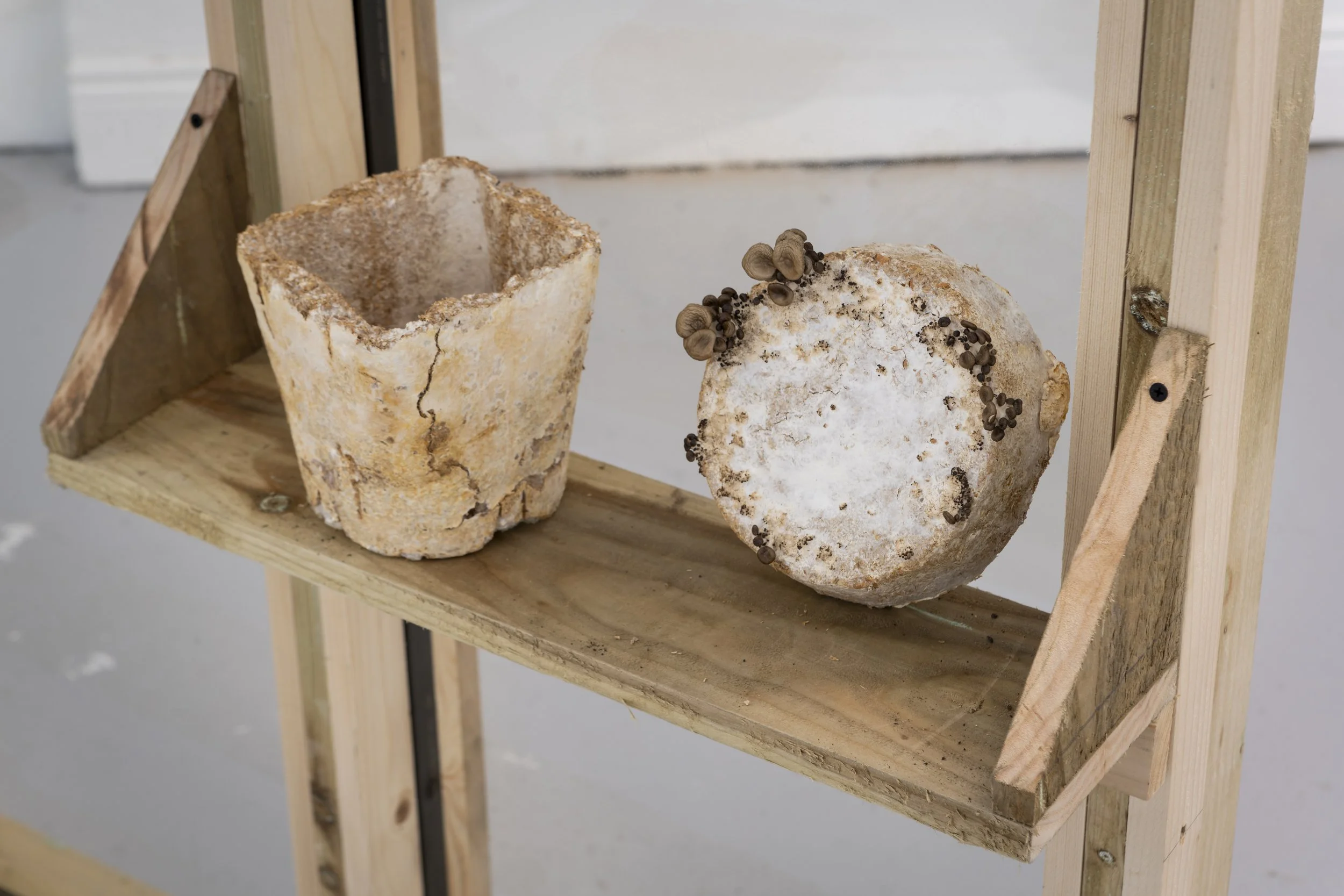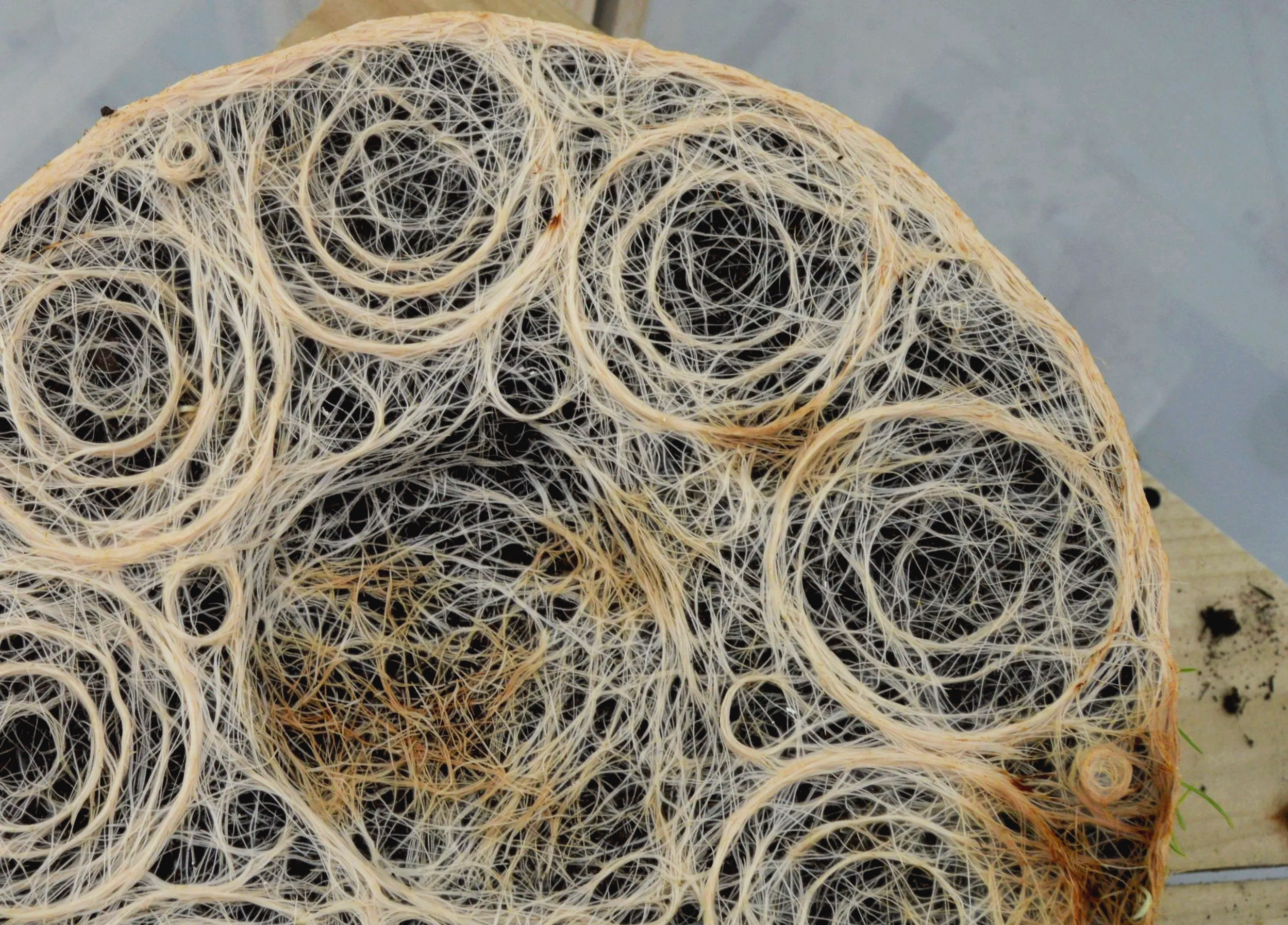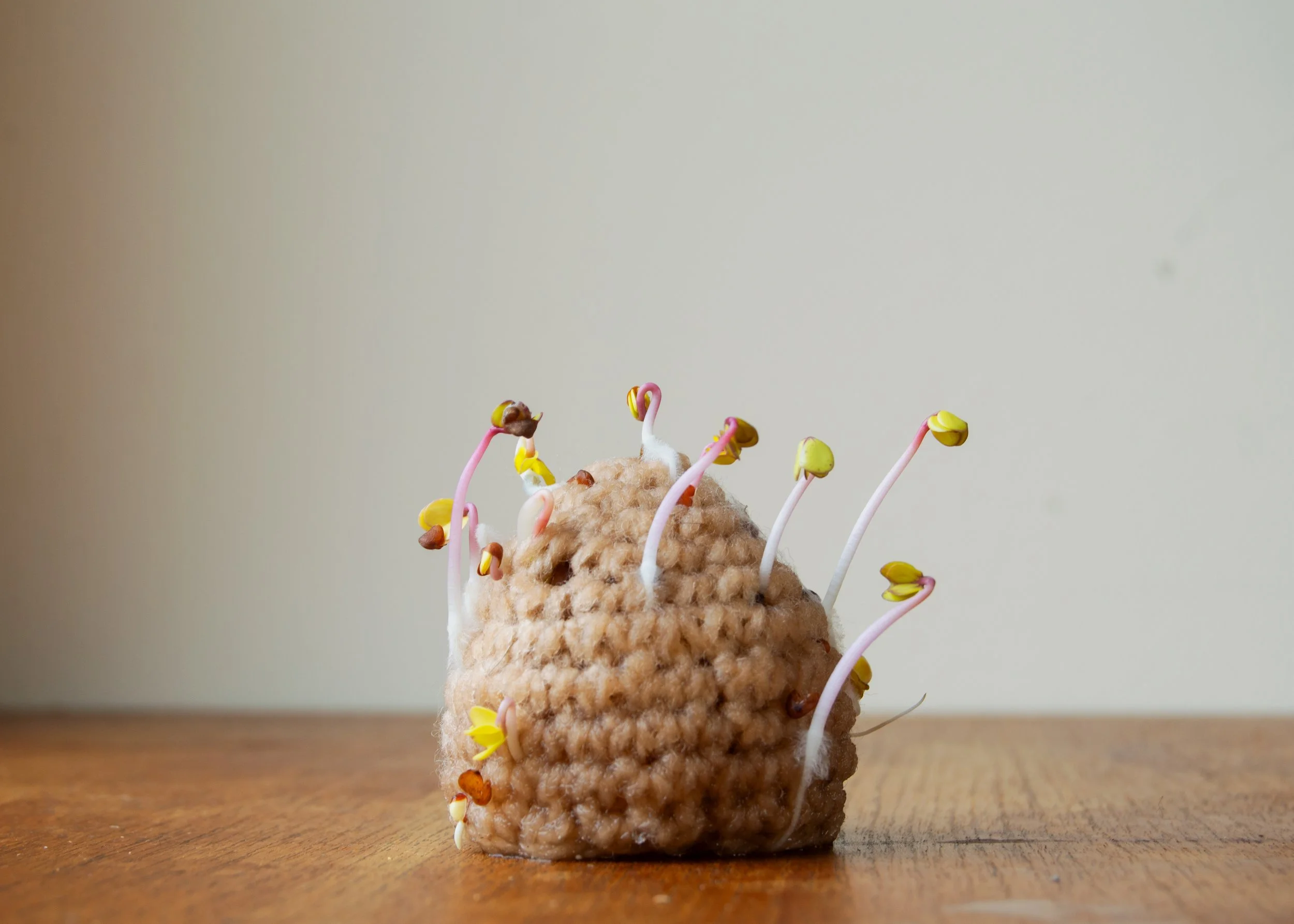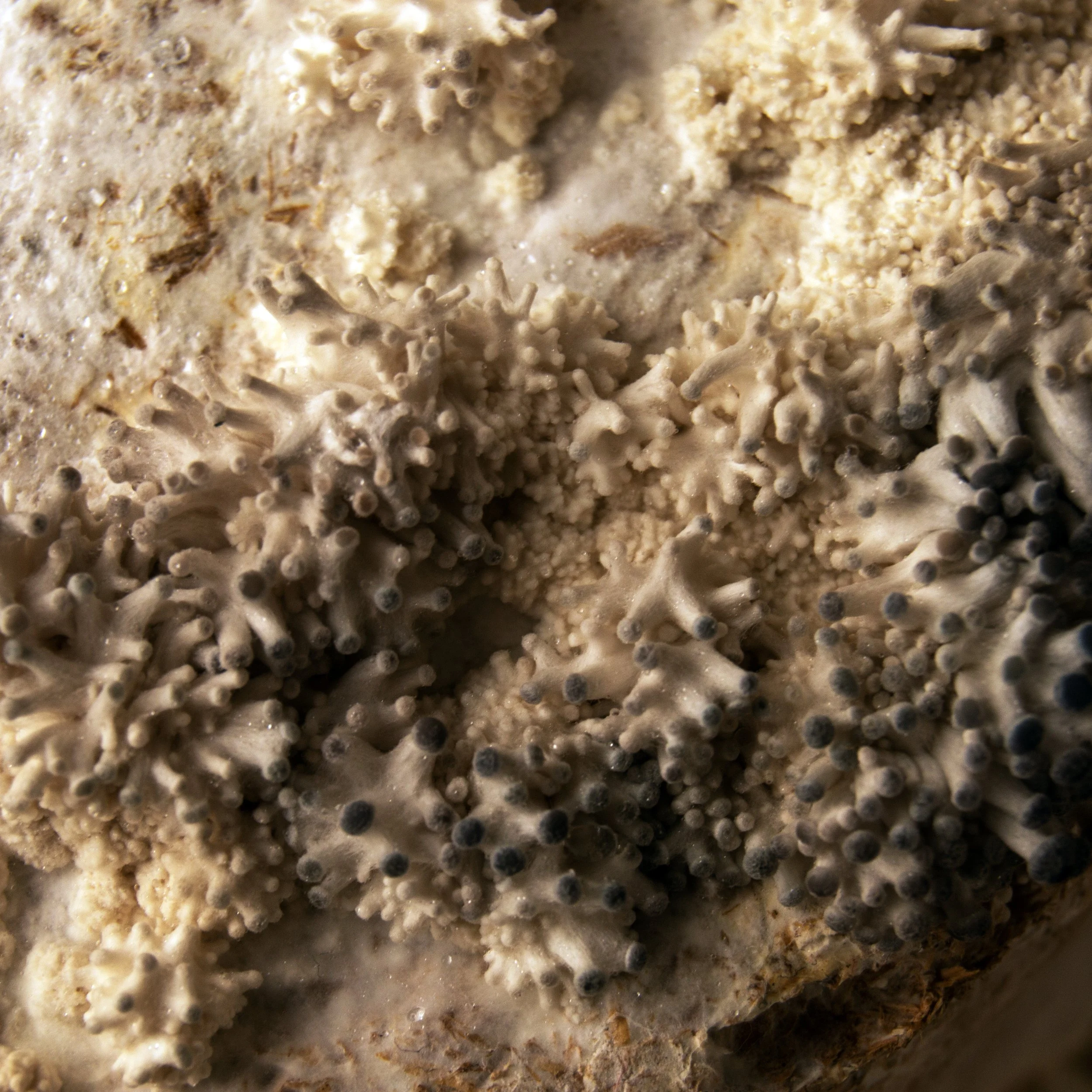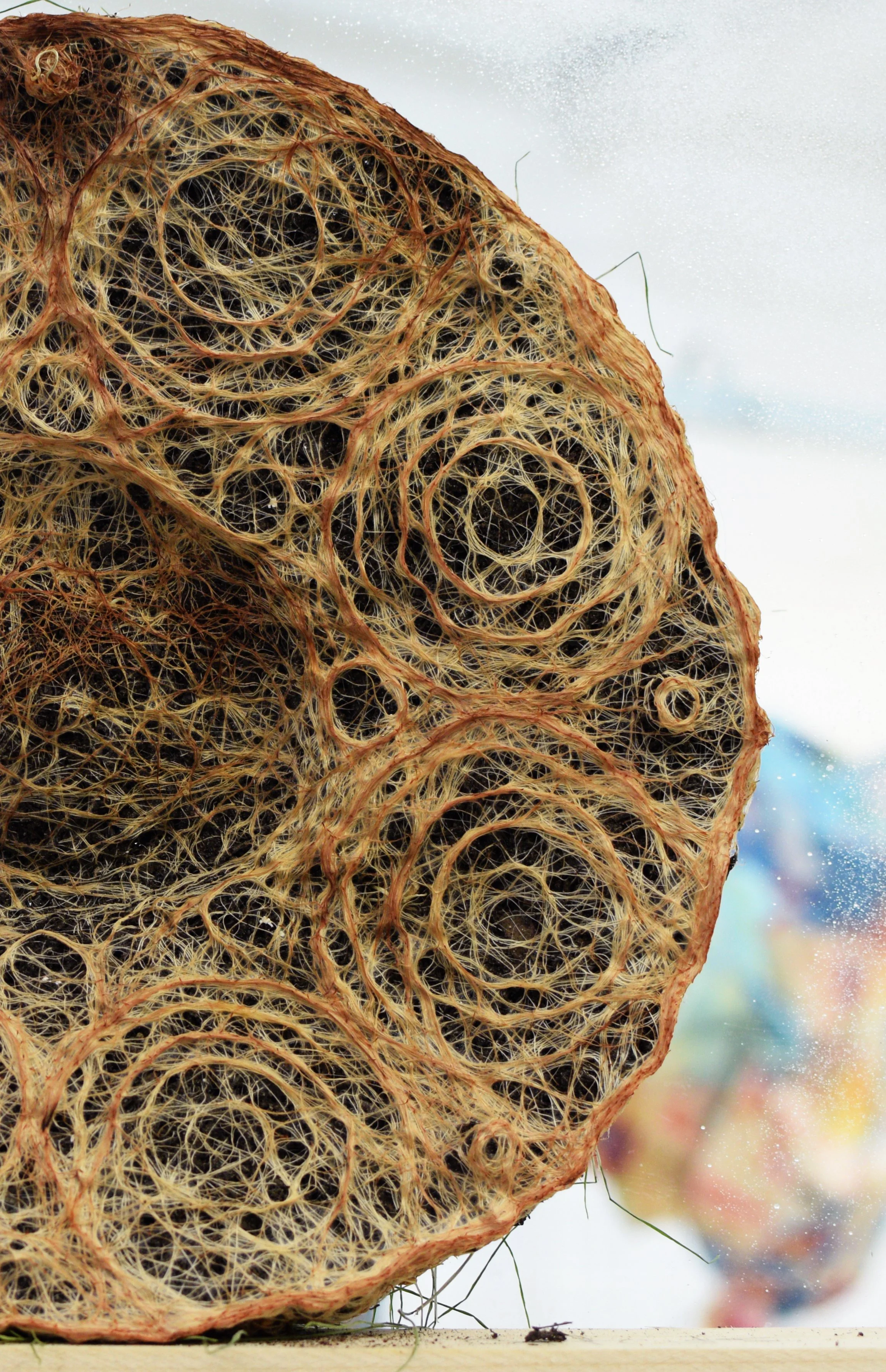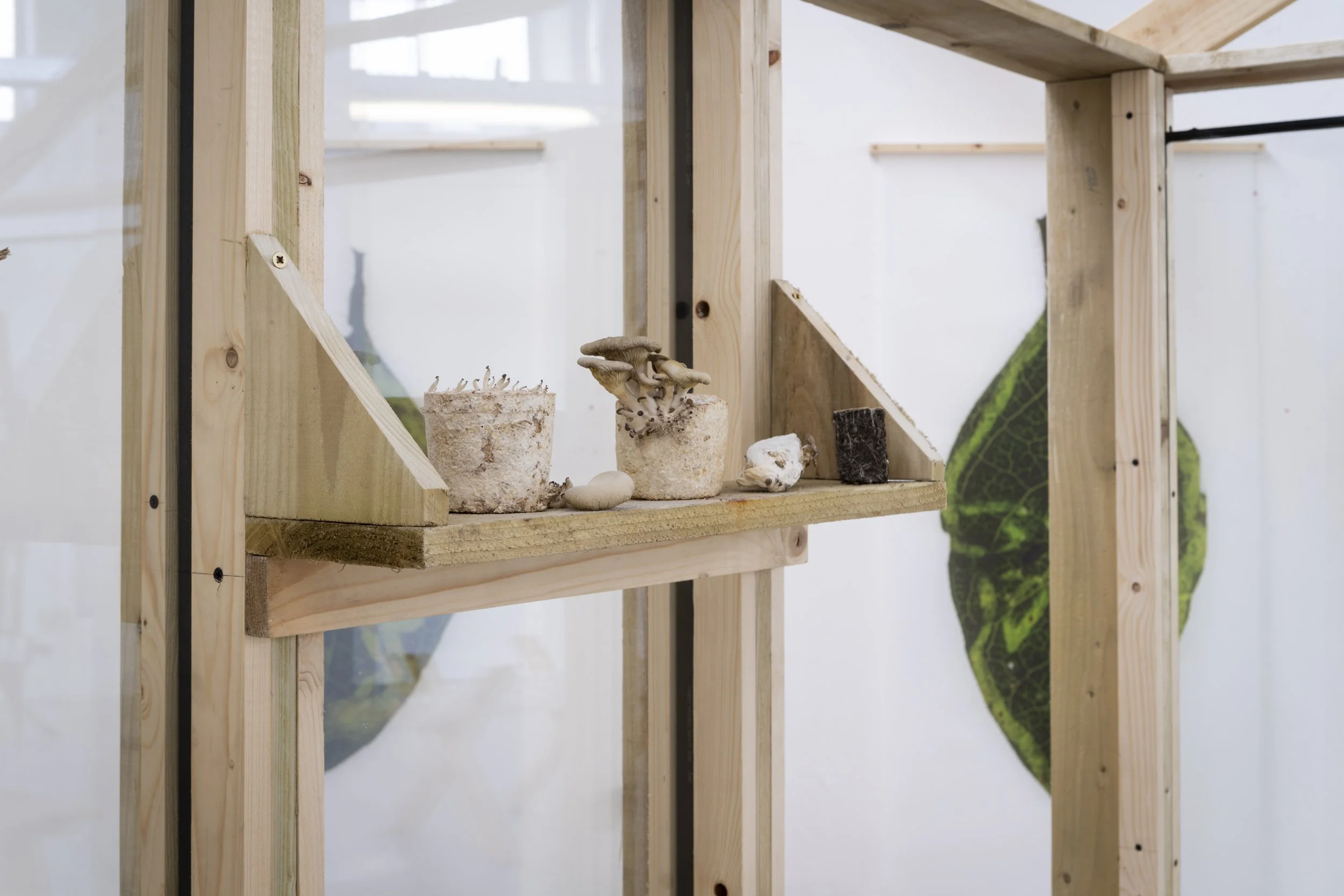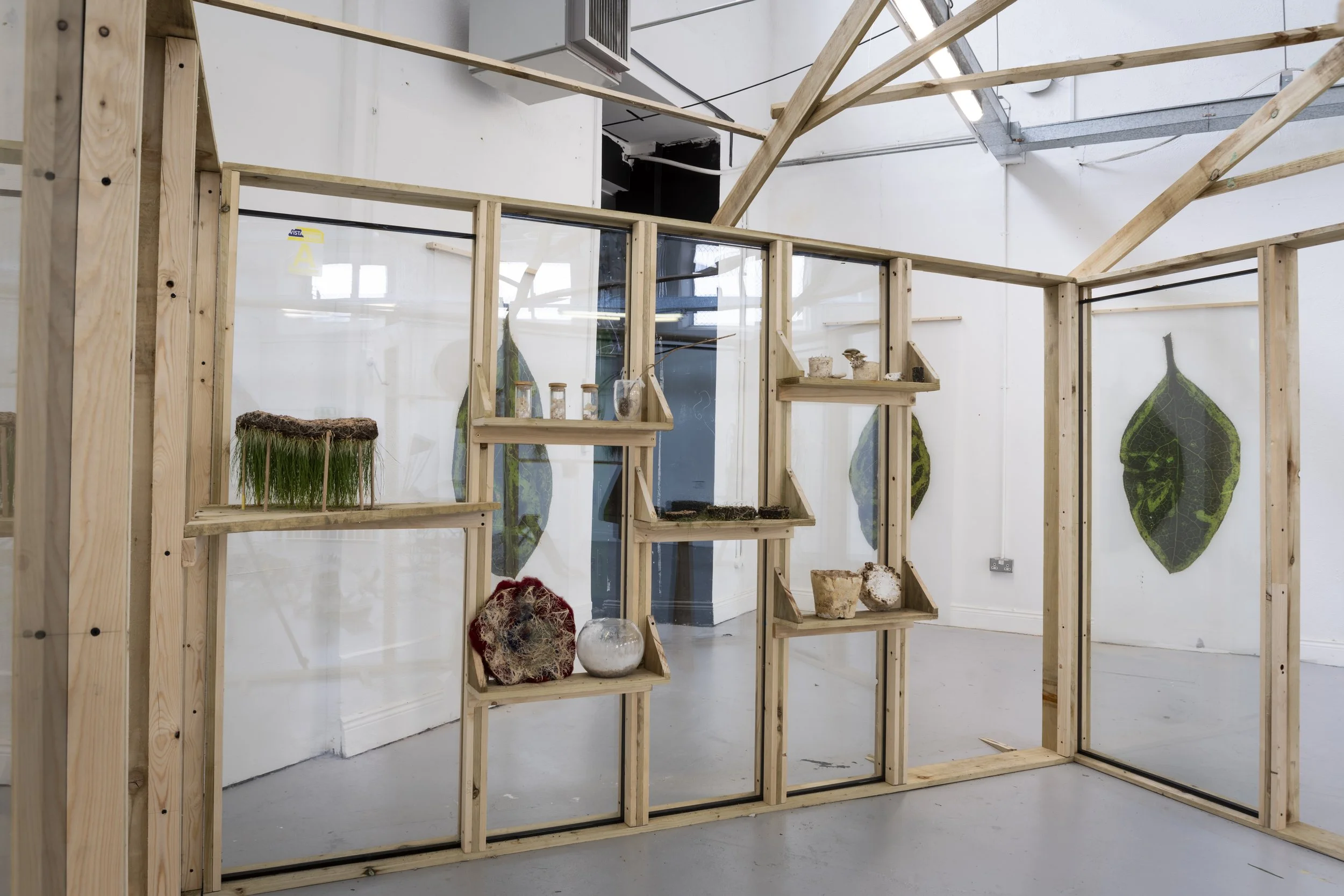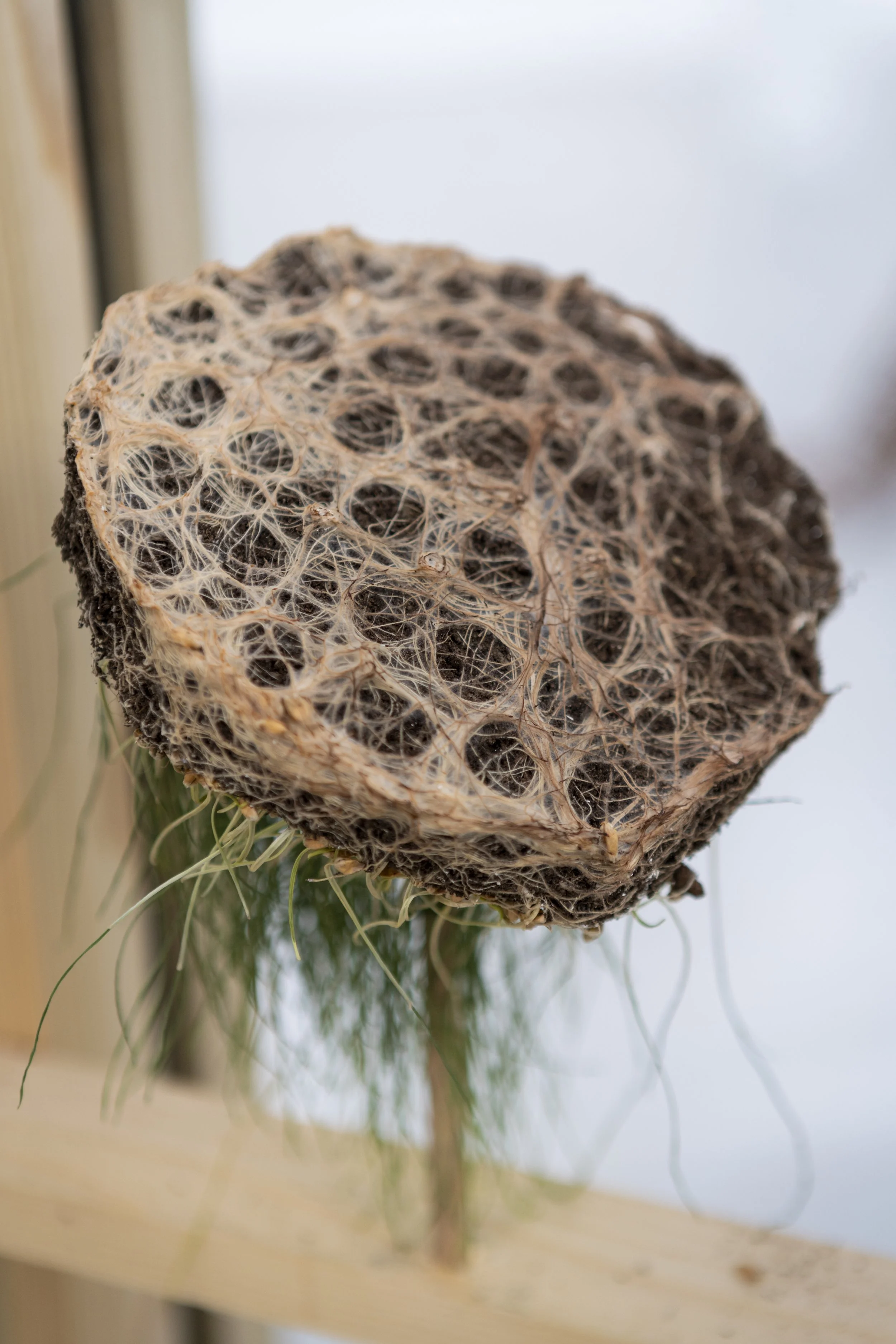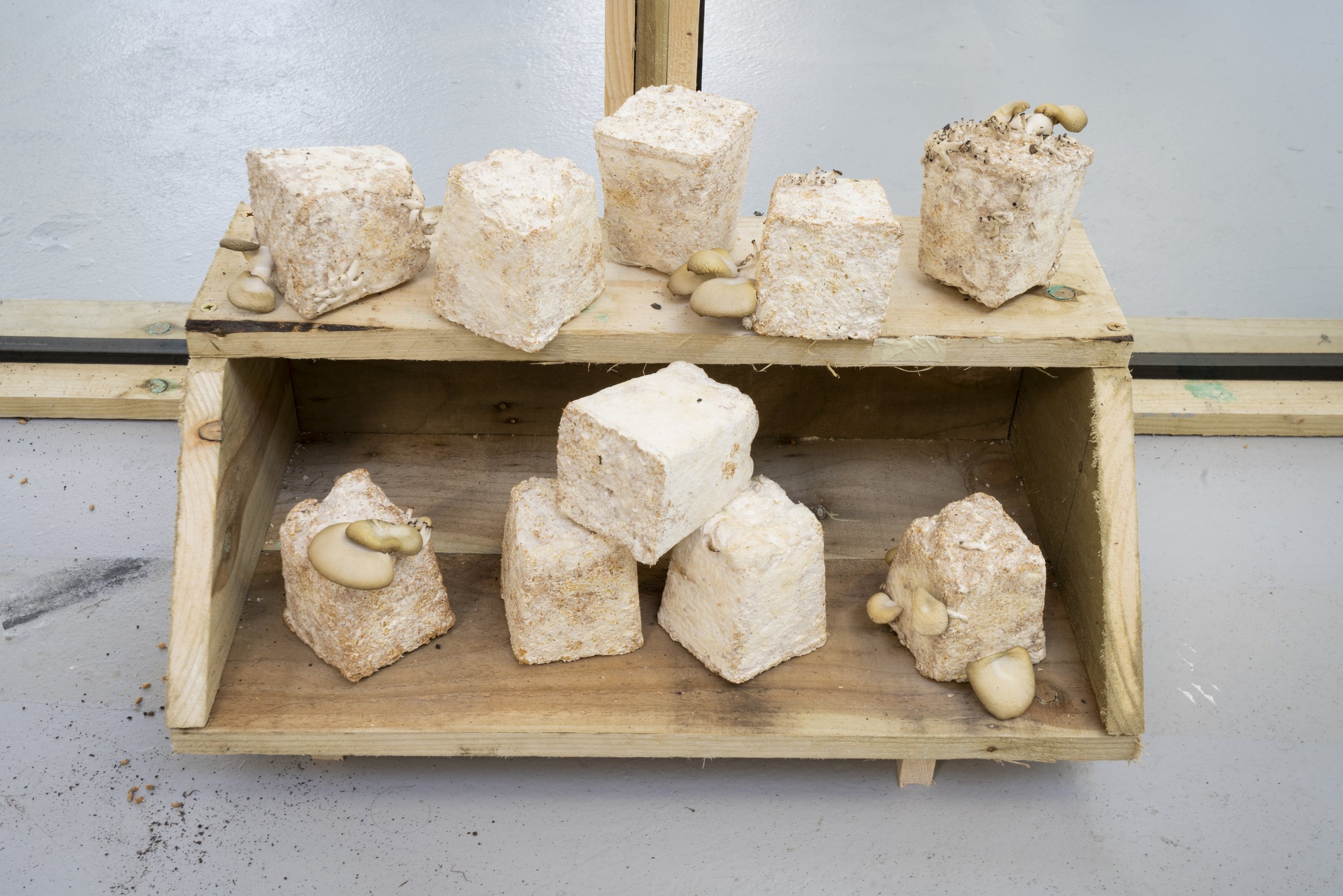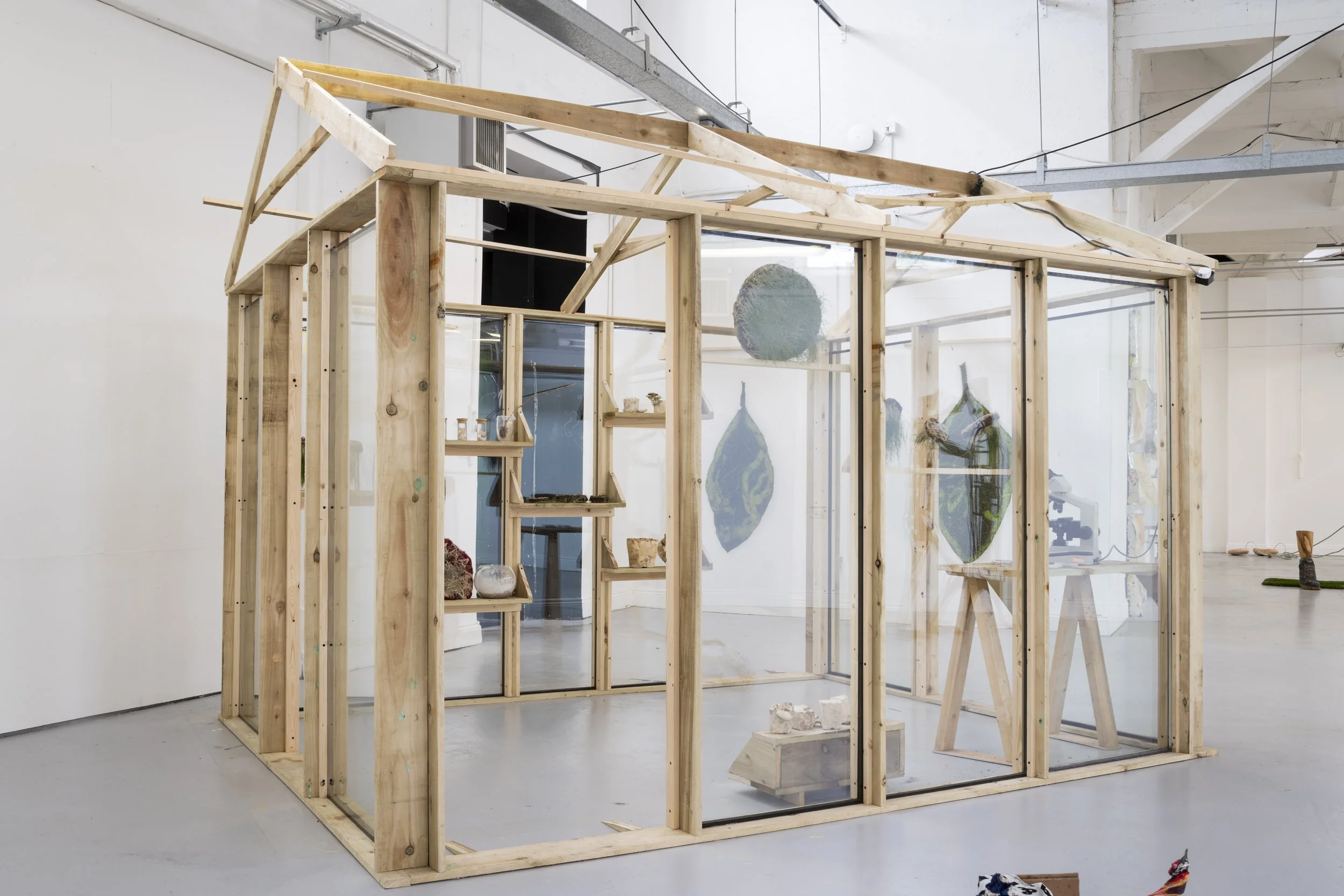
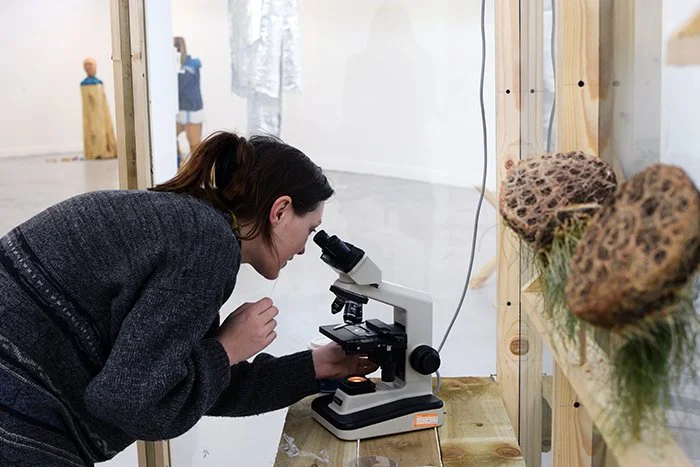
Greenhouse Studio reveals hidden worlds through collaborative processes with plants and fungi. The installation operates as a small circular ecosystem: oxygen produced by the wheatgrass feeds the fungi, while carbon dioxide released by the fungi supports the plants. Materials circulate in similar ways—sawdust produced during the construction of the timber structure becomes substrate for growing mycelium, alongside cardboard and wool.
By working with these living systems and reclaimed materials, the project highlights the generative potential of what is often considered waste. Greenhouse Studio invites reflection on contemporary consumption culture, offering a sensory experience of slow design and ecological mindfulness.
Greenhouse Studio (2024)
Timber, recycled glass windowpanes, Pleurotus ostreatus mycelium, wheatgrass, sawdust, wool, petri dishes, microscope, various glass vessels
Dimensions: 8 × 12 ft
This installation functions as a grow house for collaborative experiments, facilitating creative exchanges between plants and fungi while exploring ideas of distributed authorship.
Working with nature as a partner, sun and water are harnessed as tools for fabrication. Wheatgrass roots grow into handmade moulds inspired by celebratory solar symbolism found on Bronze Age sun shields. Oyster mushroom mycelium are cultivated using waste materials and packaging, allowing the organisms to influence the shapes and forms that emerge.